A portable air conditioner can make a bedroom, home office or rented apartment more comfortable when a permanent split system is not practical. The category looks simple, but cooling capacity alone does not determine whether a unit will work well. Room size, afternoon sun, window design, exhaust setup, humidity and noise all change the result. This guide explains the details worth measuring before you buy and the trade-offs that matter after the first hot week.
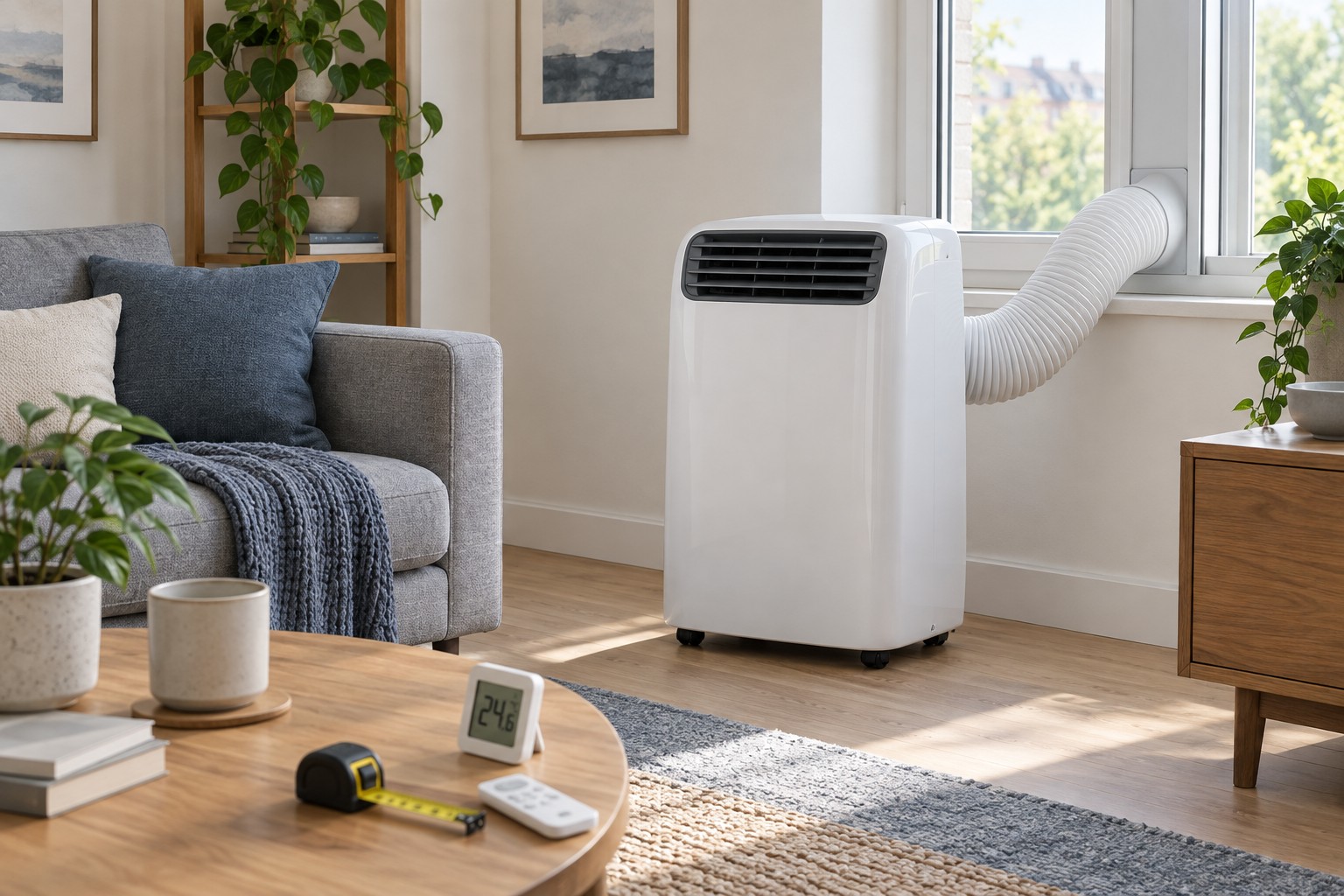
Measure the room and its heat load
Start with the floor area, ceiling height and the way the room is used. A small shaded bedroom has a lighter cooling load than a top-floor office with large west-facing windows and several computers. Count the people normally present and note appliances that release heat. Open doorways also matter because the machine may try to cool adjoining space rather than the room shown in your calculation.
Manufacturers publish cooling capacity in BTU, but regional standards and test methods can differ. Compare ratings measured under the same standard and use the recommended room range as a starting point. Oversizing is not always an advantage: a large unit may cycle frequently, create more noise and remove humidity less evenly. Undersizing forces the compressor to run continuously without reaching the desired temperature.
Understand single-hose and dual-hose designs
A single-hose model sends hot condenser air outdoors through one duct. Because that air comes from inside the room, replacement air can be pulled through gaps around doors and windows. The design is common, compact and easy to install, but efficiency may fall in very hot conditions. A dual-hose system draws outdoor air for the condenser and sends it back outside through a second hose, reducing negative pressure in the room.
Dual-hose models can cool more consistently, although the window kit is bulkier and the machine may cost more. Whichever type you choose, keep the exhaust hose as short and straight as the instructions allow. Long loops and sharp bends trap heat and restrict airflow. Seal the window insert carefully; a visible gap can return hot outdoor air faster than the unit removes it.
Check the window before ordering
Most included kits are designed for vertically or horizontally sliding windows. Casement windows that swing outward often need a fabric seal or a custom panel. Measure the opening, the sill depth and the distance from the planned machine position to the exhaust port. Confirm that the kit can lock securely and that the installation will not interfere with curtains, blinds or an insect screen.
Renters should check whether screws or adhesive are allowed. A removable foam seal can improve efficiency without permanent changes, but it should still resist rain and wind. If security is a concern, add a suitable window stop so the partially open window cannot be moved from outside.
Treat noise as a primary specification
Unlike a window or split system, a portable unit keeps the compressor and both fans inside the room. Published sound levels are useful only when the operating mode and distance are stated. Read reviews that describe compressor startup, fan pitch and vibration rather than relying on one decibel number. A steady low sound is often easier to tolerate than repeated cycling or a high-frequency tone.
For a bedroom, check whether the display can be dimmed and whether sleep mode makes gradual temperature changes instead of simply reducing fan speed. For calls and focused work, consider how far the unit can sit from the desk while still keeping the hose within its permitted length. Placing it on a solid level floor can reduce rattling.
Plan for drainage and humidity
Many machines evaporate part of the collected moisture through the exhaust, but they may still need manual drainage during humid weather. Find the drain location and make sure a shallow tray can fit underneath. Continuous drainage can be convenient if there is a suitable floor drain, but the hose must slope downward and remain protected from kinks.
A dehumidify mode can improve comfort on mild damp days, yet it may require a drain even when cooling mode does not. Check whether the water tank has a clear warning and whether the machine restarts automatically after it is emptied. In a basement or humid coastal climate, moisture handling deserves as much attention as the headline cooling rating.
Compare controls, airflow and power needs
Useful controls include a clear thermostat, several fan speeds, a timer and louvers that direct cool air away from one fixed spot. Wi-Fi can help start the unit before a room is occupied, but essential settings should remain available on the control panel and remote. Check whether the machine remembers settings after a brief power interruption.
Portable air conditioners draw substantial current. Use the type of grounded outlet specified by the manufacturer and avoid ordinary extension leads. Confirm that other high-load appliances do not share the same circuit. Energy figures should be compared at similar cooling capacities, because a small unit naturally uses less electricity but may run longer in a room beyond its intended size.
Maintenance and final checks
Wash or vacuum the air filter on the recommended schedule and keep both intake and outlet grilles clear. Dust reduces airflow and makes the compressor work harder. At the end of the season, drain remaining water, run the fan if the manual recommends it, clean the filter and store the hose without crushing it. Keep the unit upright during transport and follow the required waiting period before switching it on again.
Before buying, confirm the room calculation, window-kit fit, hose arrangement, drainage plan, noise expectations and electrical circuit. Then compare warranty coverage and the availability of filters, remotes and replacement window parts. The best portable air conditioner is the model that can exhaust heat effectively, control humidity and remain tolerable in the room where it will actually run.